
Gifted child, gifted parent: How your child’s wiring reflects yours - and what to do about it

You watch your child closely:
Brilliance flickering in their eyes.
Ideas tumbling out faster than they can write them down.
Pitch-perfect one moment, then suddenly overwhelmed or shut down the next.
It’s thrilling.
And disorienting.
So alive, and yet - sometimes - so fragile.
You ask yourself quietly: Why is this so hard?
And then, something clicks.
You notice a familiar rhythm - the intensity, the spirals, the perfectionism.
The way your child lights up when fully absorbed.
The way they crumble when asked to just get on with it.
You start remembering your own childhood.
How teachers praised your cleverness but missed your confusion.
How adults celebrated your focus but never noticed your shutdowns.
The impatience, the emotional sensitivity, the all-or-nothing thinking - it doesn’t feel so foreign anymore.
Here’s the truth:
When a child is gifted and neurodivergent - when their wiring is deep, fast, and complex - their parent often carries that same wiring too.
You may have spent decades calling yourself driven, ambitious, a high-achiever.
And you probably were.
But it’s also possible you’ve been navigating neurodivergence without knowing it.
This isn’t about blame.
It’s about awareness.
And giving both you and your child the language, tools, and understanding that were missing for so long.
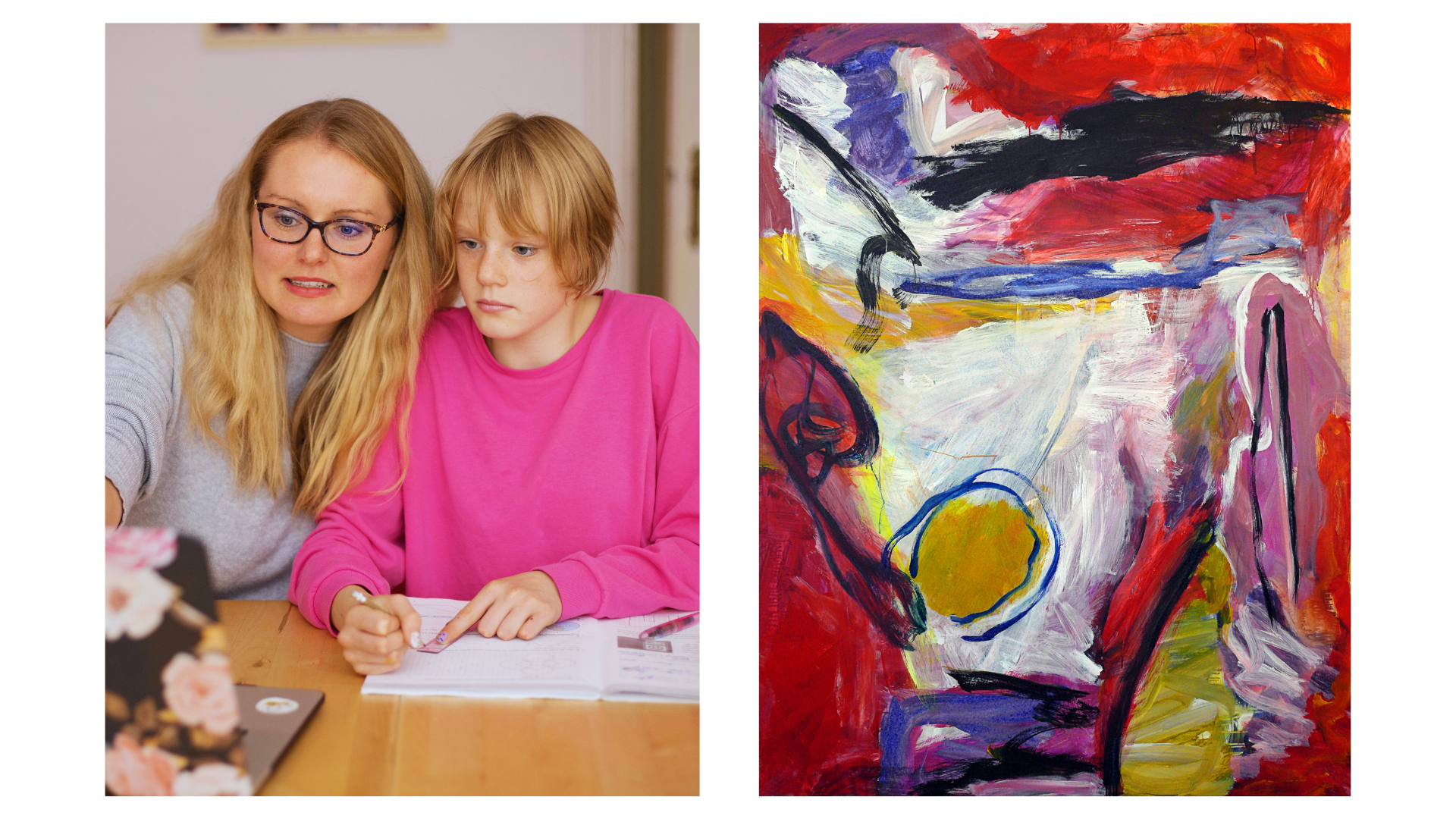
The mirror between parent & child
I’ve spent years working with high-capacity parents who first reached out because of their child’s struggles.
Sometimes it’s framed as boredom.
Other times, anxiety.
More often, it’s that feeling of nothing quite fitting. School, friendships, routines - it all feels off.
And somewhere between the lines of describing their child, the parent pauses.
Their voice softens.
They say something like, “I can see myself in him/her. But I just got on with things (because I had to).”
Here’s what we now know - and what many of us sensed long before the research caught up:
Giftedness is often a form of neurodivergence.
It isn’t just about high achievement. It’s about how someone experiences and processes the world.
That means the very traits you admire - or struggle to manage - in your child might be echoing parts of yourself:
A mind that runs fast and doesn’t switch off
Big emotions that don’t fit in tidy boxes
Sensitivities that make everyday life feel intense
A split between cognitive ability and emotional regulation
This isn’t just coincidence. It’s a shared nervous system language - one you may not have realised you both speak.
When your own neurodivergence has been masked, misunderstood, or unnamed for years, you may find yourself parenting from a default mode:
Disciplining instead of decoding.
Redirecting instead of relating.
Trying to “fix” what doesn’t need fixing.
But what your child most often needs?
Is to feel understood.
Not managed. Not corrected. But seen - in their intensity, their sensitivity, their brilliance.
And the person who can most powerfully do that…
is usually the one who recognises those traits in themselves.

Three shifts that support regulation, for both of you
When your child is gifted and neurodivergent, parenting can feel like walking a tightrope with no guidebook. But with a few key shifts, it becomes less about controlling behaviour - and more about supporting the nervous system, for both of you.
1. See the wiring, not just the symptoms
Instead of “He won’t sit still,” try: “He needs to move.”
Instead of “She’s being lazy,” try: “Her brain might work in bursts - then need rest to recover.”
Language matters.
When you start tracking your child’s wiring - not just their behaviour - you shift from frustration to curiosity. You stop pathologising. You start decoding.
And that subtle shift? It creates space for understanding instead of shame.
This is especially true for ADHD, autism, and twice-exceptional kids, where standard parenting frameworks often don’t apply. When you look beneath the surface - at sensory processing, emotional regulation, and cognitive pacing - you begin to meet your child where they actually are, not where they’re “supposed” to be.
2. Learn co‑regulation, not command
Neurodivergent kids rarely respond well to pressure or praise tied to performance. What they respond to is presence.
Rhythm.
Safety.
When you regulate your system first - through breath, posture, tone - you create a steadying presence that their nervous system can borrow.
This is co-regulation. And it’s foundational when your child’s body is constantly scanning for safety cues in an overwhelming world.
Forget “calm down.”
Instead: Can I sit with you? Let’s breathe together. We can ride this wave.
When you model regulation, you’re not just helping them feel better in the moment.
You’re wiring in lifelong skills for managing intensity.
3. Parent the adult, too
If your child’s traits are familiar - it’s probably not a coincidence.
You may share the same wiring.
And if you’ve spent a lifetime overriding your own needs, ignoring your sensory overwhelm, or people pleasing for approval - it makes sense that parenting hits a nerve.
You can’t pour from an empty cup.
And parenting from a place of depletion often leads to control, disconnection, or deep guilt.
Start by asking:
“If someone had met me with compassion and regulation when I was a child… what might I have needed?”
Then offer yourself some of that.
Even five minutes a day of tending to your system - nervous system rest, joyful movement, non-performative support - shifts how you show up.
Because parenting isn’t just about giving. It’s about remembering. Reparenting. Returning.

When this lands - what actually changes
You stop feeling like you’re the only one fumbling through it.
Instead, you start recognising a familiar pattern: a powerful mix of high expectations, deep emotional sensitivity, and unspoken neurodivergent wiring - in your child and in yourself.
You move from correction to connection.
From “What’s wrong with them?” to “What are they telling me?”
And that shift? It changes everything.
You begin to model regulation instead of rushing.
You pause when your nervous system says “not now” instead of pushing through.
You get curious about your child’s needs instead of defaulting to control.
And in doing so - you show them what it means to honour their experience, too.
This isn’t just about “better parenting.”
It’s about nervous system safety.
About co-creating a home where being wired differently isn’t something to fix - it’s something to understand.
And when your child sees you meeting yourself with more patience, attunement, and presence?
They learn to meet themselves that way, too.
That’s not just parenting.
That’s repair.
That’s legacy.

If you’ve watched your child struggle - emotionally, socially, or in ways you can’t quite name - you may have assumed it was just their story.
But what if it’s your story too?
The moments of sensory overwhelm.
The deep thinking paired with emotional fragility.
The feeling of being too much and not enough all at once.
Recognising this shared wiring doesn’t make things more complicated.
It actually simplifies everything.
Less performing, more presence.
Less fixing, more witnessing.
Less pressure to “get it right,” more permission to be real - together.
Because when you begin to understand your own neurodivergence, you begin to meet your child with a deeper level of empathy, clarity, and nervous system safety.
If you’d like to explore how these patterns show up in your family - and how we can begin to shift them - I offer therapeutic coaching for gifted, sensitive, and neurodivergent parents who want to support their children without abandoning themselves in the process.
This is part of a monthly series on neurodivergence, burnout, and healing. Subscribe to the newsletter for stories and tools that meet you where you are.
May you be the light that the world needs.
